
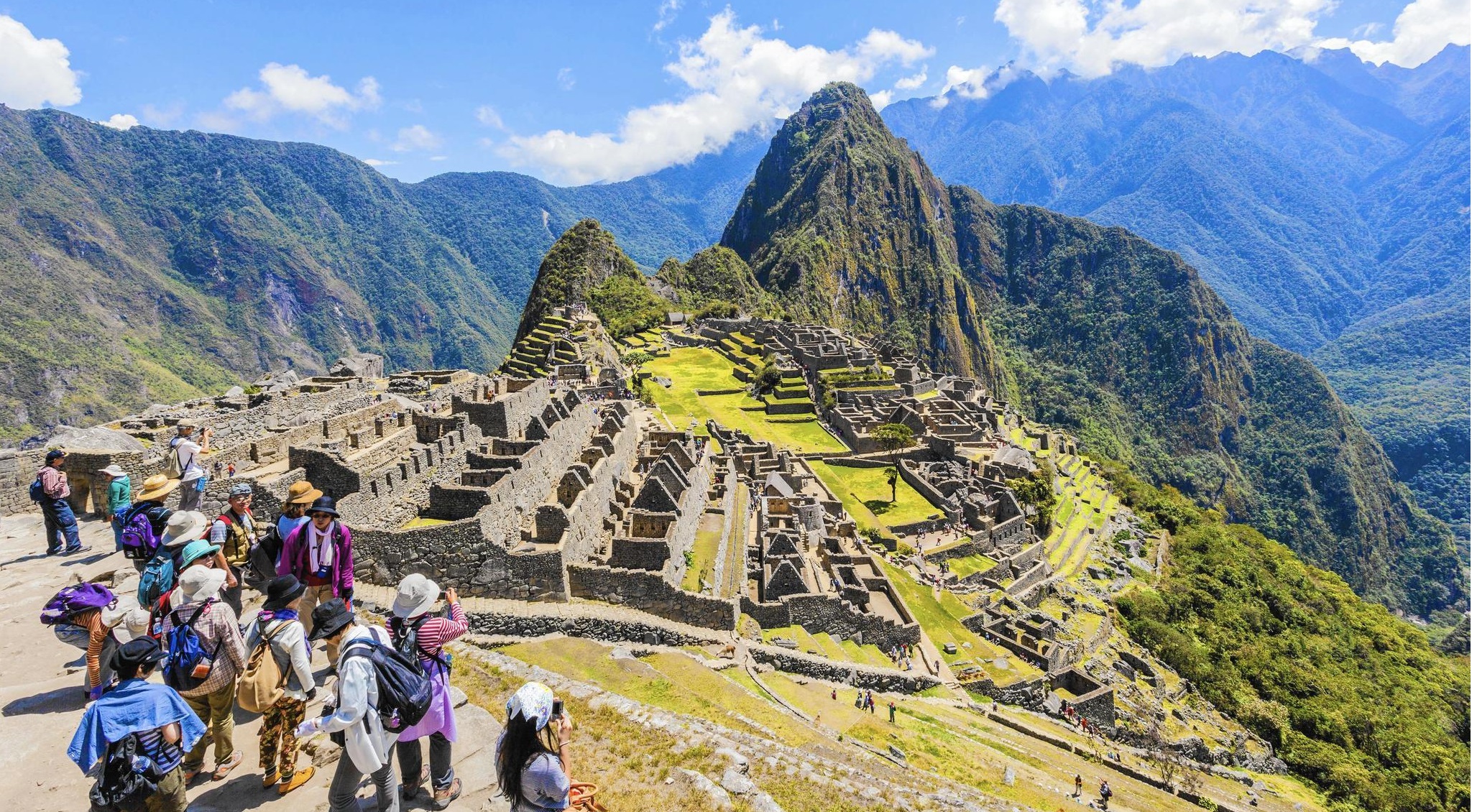
(Cusco Transportation Guides) – If you are researching how to get to Machu Picchu from Cusco, the most practical and recommended option is the road and train route via Ollantaytambo.
The journey from Cusco to Machu Picchu by train is not direct. First, travelers must arrange transportation from Cusco to Ollantaytambo by road. From Ollantaytambo, trains operate to Aguas Calientes (Machu Picchu Pueblo), the gateway town located below Machu Picchu.
There is no highway access to Machu Picchu itself. Every visitor traveling from Cusco to Machu Picchu must combine:
- Road transfer from Cusco to Ollantaytambo
- Train from Ollantaytambo to Aguas Calientes
- Bus from Aguas Calientes to Machu Picchu entrance
This Cusco to Machu Picchu road and train combination is:
- The fastest non-hiking option
- The most reliable transportation method
- The safest way to guarantee your train connection
- The most popular route used by international travelers
Whether you are organizing a Cusco to Ollantaytambo transfer, booking a train from Ollantaytambo to Aguas Calientes, or planning the complete Cusco to Machu Picchu transportation route, understanding how the road and train connection works is essential.
In this complete guide, we explain step by step how to get from Cusco to Machu Picchu by road and train, including travel time, logistics, scheduling strategy, and the best way to coordinate your Sacred Valley transfer with your Machu Picchu train tickets.
Cusco to Machu Picchu Road + Train Guide
- Overview: Road + Train Route to Machu Picchu
- Step 1: Cusco to Ollantaytambo by Road
- Why Most Trains Depart from Ollantaytambo
- Step 2: Train to Aguas Calientes
- Step 3: Bus to Machu Picchu Entrance
- Total Travel Time & Planning
- Best Way to Organize the Road + Train Route
- Important Travel Tips
How to Get to Machu Picchu from Cusco by Road + Train
The most practical and widely used way to reach Machu Picchu from Cusco is by combining road transportation through the Sacred Valley with a train connection to Aguas Calientes.
The complete Cusco to Machu Picchu road + train route includes three stages:
🚗 Road transfer from Cusco to Ollantaytambo (approximately 1.5 to 2 hours)
🚆 Train from Ollantaytambo to Aguas Calientes (Machu Picchu Pueblo) (approximately 1 hour 30 minutes)
🚌 Shuttle bus from Aguas Calientes to the Machu Picchu entrance (25 minutes uphill)
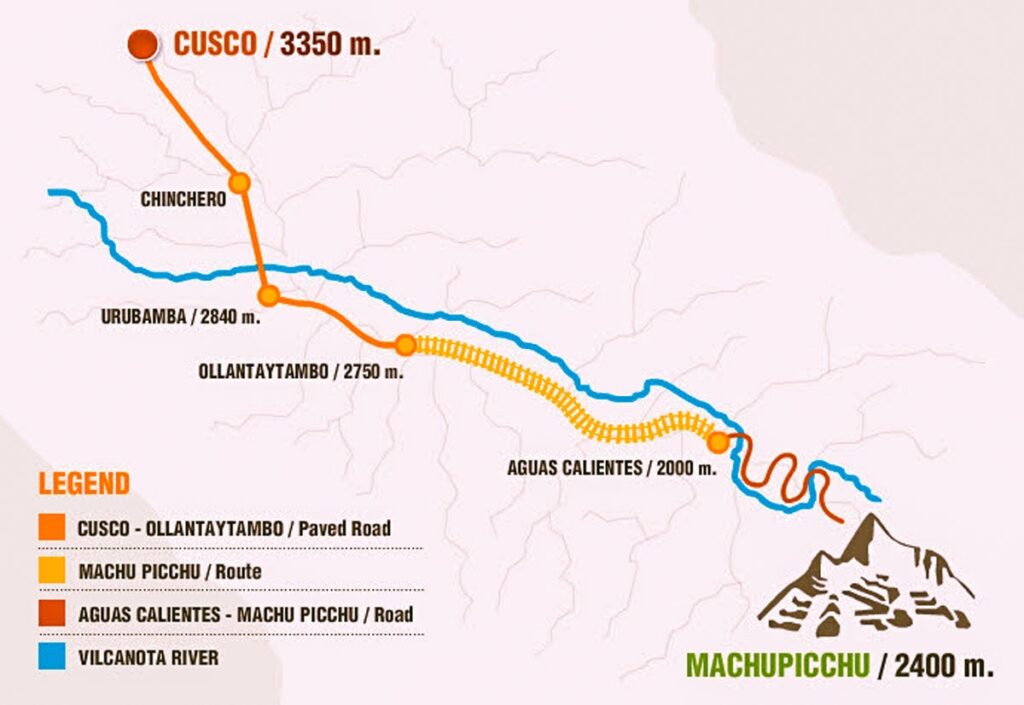
There is no direct highway or private vehicle access to Machu Picchu. The Inca citadel is located in a protected mountain area, and access is strictly controlled. For this reason, every traveler coming from Cusco must first reach Aguas Calientes by train before continuing to the archaeological site.
Most trains to Machu Picchu depart from Ollantaytambo in the Sacred Valley rather than central Cusco. This makes organizing reliable transportation from Cusco to Ollantaytambo a crucial part of the journey. Travelers typically arrange either a private transfer, shared shuttle, or taxi to reach the train station on time.
Travelers with early departures often arrange a pre-booked Cusco to Ollantaytambo transfer to ensure punctual arrival at the train station.
Once in Aguas Calientes, visitors take the official shuttle buses that operate continuously throughout the day to the Machu Picchu entrance gate. Walking is possible, but most travelers prefer the bus to conserve energy for exploring the site.
This Cusco to Machu Picchu road and train connection is the standard transportation method used by the majority of visitors because it offers:
- Predictable travel times
- Multiple daily train departures
- Scenic views along the Urubamba River
- The most comfortable non-hiking route
Step 1: Cusco to Ollantaytambo by Road
The journey to Machu Picchu begins with a road transfer from Cusco to Ollantaytambo, the main departure point for trains to Aguas Calientes.
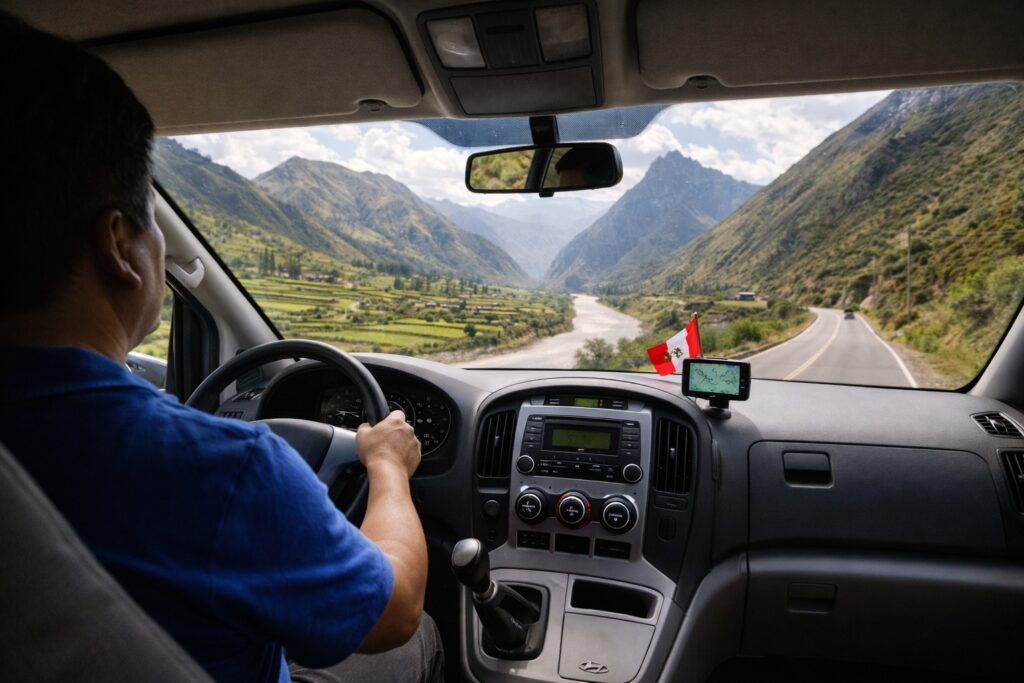
Distance: approximately 60 kilometers (37 miles)
Travel time: 1 hour 30 minutes to 2 hours, depending on traffic and departure point
Although the distance is relatively short, the route passes through mountainous Andean terrain, and travel time can vary slightly due to curves, local traffic, or seasonal weather conditions.
Most travelers depart from:
- Hotels in central Cusco
- Cusco Historic Center (Plaza de Armas area)
- Alejandro Velasco Astete Cusco Airport
- Hotels in the Sacred Valley
Because many trains to Machu Picchu depart early in the morning, punctual departure from Cusco is essential. Arriving late to Ollantaytambo station can result in missing your train, as departures are strict and tickets are non-flexible.
What the Road Journey Is Like
The drive from Cusco to Ollantaytambo follows a scenic route descending from 3,400 meters (11,150 ft) in Cusco down into the Sacred Valley, which sits at a lower altitude of around 2,800 meters (9,200 ft).
This gradual descent offers two advantages:
- Improved acclimatization compared to staying in Cusco
- Smoother breathing conditions for many travelers
You might also be interested in: How to prevent altitude sickness in Cusco and Machu Picchu
The road passes through traditional Andean villages, agricultural terraces, and views of the Urubamba River valley. Many visitors choose to incorporate short stops at:
- Pisac (market and archaeological site)
- Maras Salt Mines
- Moray agricultural terraces
However, if you are connecting directly to a train departure, it is important to calculate buffer time carefully.
Transportation Options from Cusco to Ollantaytambo
There are several ways to organize the Cusco to Ollantaytambo transfer:
Shared vans (colectivos):
- Budget-friendly
- Fixed departure schedules
- Limited luggage space
- Less flexible timing
Taxi:
- More direct
- Price negotiable
- Quality and punctuality may vary
Private transfer:
- Door-to-door pickup
- Fixed departure time
- Dedicated vehicle
- Space for luggage
- Recommended for early morning train departures
For travelers with confirmed train tickets from Ollantaytambo to Aguas Calientes, reliability is crucial. Train operators require passengers to arrive at the station at least 30 minutes before departure, and boarding closes strictly before train departure time.
For this reason, many visitors prefer a pre-arranged private transfer to ensure a smooth and stress-free connection between Cusco and Ollantaytambo.
Why Most Trains to Machu Picchu Depart from Ollantaytambo
Although some trains operate from Cusco (Poroy station), the majority depart from Ollantaytambo.
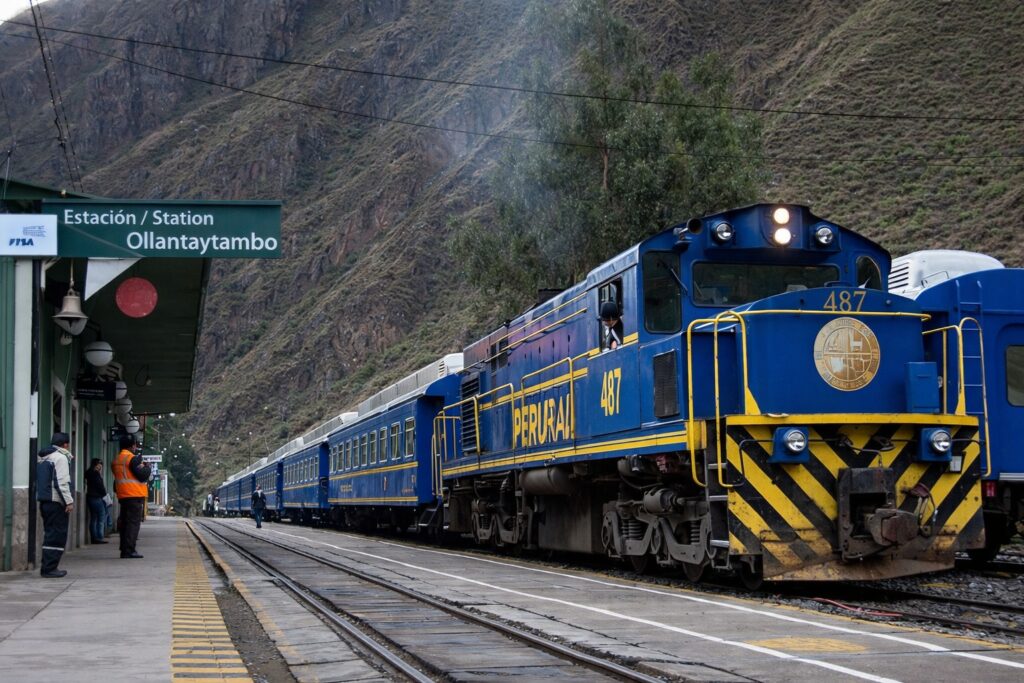
Reasons:
- Shorter train journey
- More departure times
- Better schedule availability
- Easier logistics
For this reason, road transportation to Ollantaytambo is a key part of planning your Machu Picchu visit.
Step 2: Train from Ollantaytambo to Aguas Calientes
After arriving in Ollantaytambo, the next stage of the journey is the train from Ollantaytambo to Aguas Calientes (Machu Picchu Pueblo), the gateway town located at the base of Machu Picchu.
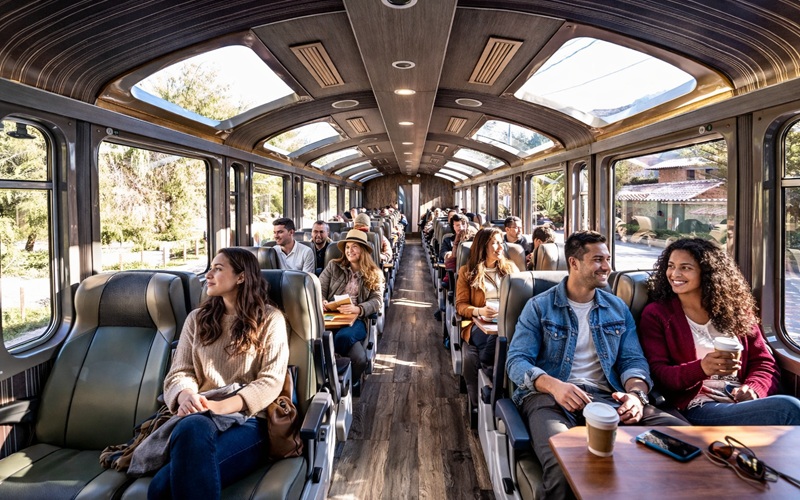
Travel time: approximately 1 hour 30 minutes
Distance: about 43 kilometers (27 miles)
Route: along the Urubamba River through the Sacred Valley
This train segment is the only rail access to Aguas Calientes and is mandatory for travelers who are not hiking.
Train Operators: PeruRail and Inca Rail
There are two main companies operating trains between Ollantaytambo and Aguas Calientes:
PeruRail
The larger and more established operator, offering multiple daily departures and a wider range of service categories.
Inca Rail
A private company operating modern trains with fewer daily departures but competitive service options.
Both companies operate similar routes and travel times. The main differences are in onboard service levels, train design, and pricing structure.
Train Categories and Service Levels
Both PeruRail and Inca Rail offer different categories of service, ranging from standard tourist class to premium panoramic experiences.
Common categories include:
Standard / Expedition-style trains
- Comfortable seating
- Large windows
- Basic onboard service
- Most economical option
- Suitable for most travelers
Panoramic / Observatory trains
- Larger windows and glass ceilings
- Enhanced scenic views
- Light snacks included
- More spacious seating
First Class / Luxury services (limited departures)
- Gourmet meals
- Live onboard entertainment
- Premium seating
- Higher pricing
Travel time remains approximately the same regardless of category. The primary differences relate to comfort, service, and onboard experience rather than speed.
Luggage Restrictions
Train operators typically allow only small to medium carry-on luggage per passenger. Large suitcases are not recommended, and storage space on board is limited.
Travelers staying overnight in Aguas Calientes often pack a small backpack and leave larger luggage stored at their hotel in Cusco.
Scheduling Considerations
Train schedules vary depending on season and demand. Departures begin early in the morning and continue throughout the afternoon.
When selecting a train:
- Confirm departure station (Ollantaytambo vs seasonal Cusco departures)
- Match arrival time with your Machu Picchu entry slot
- Allow buffer time for boarding (arrive at least 30 minutes early)
Tickets are date- and time-specific, and changes may incur fees.
What the Train Journey Is Like
The train ride from Ollantaytambo to Aguas Calientes follows the Urubamba River through narrow valleys surrounded by steep Andean mountains. As the train approaches Aguas Calientes, the scenery transitions into lush cloud forest.
This segment is often considered one of the most scenic parts of the Cusco to Machu Picchu route.
Step 3: Bus from Aguas Calientes to Machu Picchu Entrance
Once you arrive in Aguas Calientes (also called Machu Picchu Pueblo), the final stage of the journey is the ascent from the town to the Machu Picchu entrance gate.
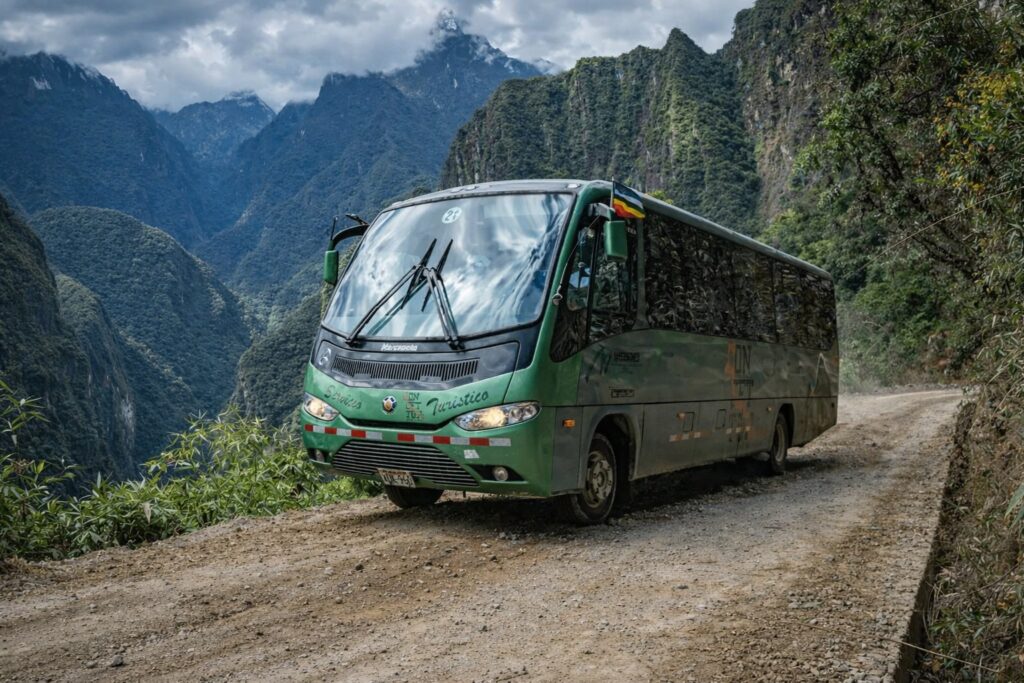
There are only two ways to reach the citadel from Aguas Calientes:
🚌 Official shuttle bus (approximately 25 minutes uphill)
🚶 Hiking route (approximately 1.5 to 2 hours uphill)
There is no taxi access, no private vehicle access, and no alternative road transport to the archaeological site.
Shuttle Bus from Aguas Calientes to Machu Picchu
The shuttle bus is the most common and practical option.
- Travel time: 20–30 minutes
- Distance: approximately 8 kilometers (5 miles)
- Road type: steep, winding mountain road with switchbacks
- Elevation gain: around 400 meters (1,300 feet)
Buses operate continuously starting early in the morning (typically around 5:30 AM) and run throughout the day according to visitor demand. During high season (May–September), queues can form early, especially for morning entry time slots.
Important details:
- Tickets are purchased in Aguas Calientes (official bus ticket office).
- Round-trip tickets are available.
- Passengers should allow extra time during peak hours.
- Boarding is first-come, first-served.
Because Machu Picchu entrance tickets have fixed time slots, it is recommended to line up for the bus at least 45–60 minutes before your scheduled entry time during busy periods.
Most visitors choose the bus because it:
- Conserves energy before exploring the site
- Reduces total travel time
- Helps maintain schedule alignment with entry slots
- Is more comfortable at altitude
Hiking from Aguas Calientes to Machu Picchu
For travelers who prefer a more active approach, it is possible to hike from Aguas Calientes to the Machu Picchu entrance.
- Duration: 1.5 to 2 hours uphill
- Difficulty: Moderate to challenging
- Terrain: steep stone steps and forest trail
The hiking route follows a shortcut path that crosses sections of the bus road and climbs directly through the cloud forest. While scenic, the climb is physically demanding, especially at altitude.
Hiking may be suitable for:
- Budget travelers
- Early arrivals before bus operations
- Visitors looking for additional physical activity
However, most travelers prefer to conserve energy for walking within the Machu Picchu archaeological site itself, which already requires several hours of exploration.
Total Travel Time from Cusco to Machu Picchu
A typical Cusco to Machu Picchu road and train journey follows this timeline:
- Cusco to Ollantaytambo (by road) → 1 hour 30 minutes to 2 hours
- Train from Ollantaytambo to Aguas Calientes → approximately 1 hour 30 minutes
- Shuttle bus from Aguas Calientes to Machu Picchu entrance → 20–30 minutes
Estimated total travel time:
Approximately 4 to 5 hours door-to-gate, not including waiting time between connections.
However, actual travel time may vary depending on:
- Traffic leaving Cusco
- Buffer time before train departure (recommended: arrive 30 minutes early)
- Waiting time for the shuttle bus in Aguas Calientes
- High-season congestion (May–September)
When planning your Cusco to Machu Picchu transportation schedule, it is important to add extra margin between each segment to avoid missing your train or arriving late for your Machu Picchu entrance time slot.
Best Way to Organize the Road + Train Route
The road + train route from Cusco to Machu Picchu is straightforward in theory, but the way you organize it can significantly impact your experience.
Because this journey involves three separate transportation stages — road transfer, train, and shuttle bus — timing coordination is essential. The most common mistakes travelers make are:
- Underestimating road transfer time from Cusco to Ollantaytambo
- Booking tight train connections
- Arriving in Aguas Calientes too close to their Machu Picchu entry slot
- Attempting same-day sunrise entry from Cusco
A well-planned strategy eliminates these risks.
1. Start with Your Machu Picchu Entrance Time
Machu Picchu entrance tickets have fixed time slots. This should be the anchor point of your planning.
Once your entrance time is confirmed:
- Work backward to determine which train you need
- Then calculate your Cusco to Ollantaytambo departure time
- Add buffer time between each segment
Planning in reverse ensures every stage aligns correctly.
2. Avoid Tight Connections
While the total Cusco to Machu Picchu travel time is approximately 4–5 hours, that estimate does not include waiting times or unforeseen delays.
Best practice:
- Arrive in Ollantaytambo at least 45–60 minutes before train departure
- Allow buffer time upon train arrival in Aguas Calientes
- Line up early for the shuttle bus if traveling during high season
Missing a train from Ollantaytambo to Aguas Calientes can disrupt the entire itinerary, as tickets are date- and time-specific.
3. Consider Splitting the Journey (Overnight Strategy)
For a smoother experience, many travelers divide the route into two days:
Option A: Overnight in Ollantaytambo
- Explore the Sacred Valley
- Take an early morning train
- Arrive in Aguas Calientes before midday
Option B: Overnight in Aguas Calientes
- Arrive the afternoon before
- Be first in line for morning shuttle buses
- Enter Machu Picchu early with less stress
This strategy reduces travel fatigue and provides greater schedule flexibility.
4. Choose Reliable Transportation for the Road Segment
The Cusco to Ollantaytambo road transfer is the foundation of the entire route. If this segment is delayed, the rest of the connection is affected.
For early departures or tight schedules, reliability becomes more important than cost savings. A punctual, pre-arranged transfer ensures alignment with train schedules and avoids last-minute transportation uncertainty.
Strategic Summary
The best way to organize the Cusco to Machu Picchu road + train route is to:
- Secure your Machu Picchu entrance ticket
- Book your train from Ollantaytambo to Aguas Calientes
- Plan your Cusco to Ollantaytambo transfer with time buffer
- Decide whether to split the journey overnight
When coordinated correctly, the road + train route is efficient, scenic, and highly predictable — making it the most practical way to reach Machu Picchu from Cusco.
Important Travel Tips for the Road + Train Route
Traveling from Cusco to Machu Picchu by road and train is straightforward when properly planned. However, small logistical mistakes can create unnecessary stress. The following tips will help ensure a smooth and well-coordinated journey.
Book Train Tickets in Advance
Train tickets from Ollantaytambo to Aguas Calientes often sell out during high season (May to September), holidays, and weekends.
- Secure your train before organizing the rest of your transportation.
- Double-check your departure station (most trains leave from Ollantaytambo, not central Cusco).
- Review luggage restrictions before departure.
Train schedules are fixed, and tickets are time-specific. Last-minute changes can be difficult.
Match Your Train Arrival with Your Machu Picchu Entry Time
Machu Picchu entrance tickets operate under strict time slots. Your arrival in Aguas Calientes and subsequent bus ride must align with your scheduled entry.
Best practice:
- Arrive in Aguas Calientes at least 1–2 hours before your entrance window.
- Allow time for the shuttle bus queue, especially in high season.
- Avoid booking train arrivals that leave minimal margin for delays.
Proper coordination between train schedules and entrance times is essential.
Add Buffer Time to the Cusco to Ollantaytambo Transfer
The road transfer from Cusco to Ollantaytambo typically takes 1.5 to 2 hours, but:
- Morning traffic in Cusco can increase travel time.
- Weather conditions during rainy season (November–March) may slow traffic.
- Road construction or local events can cause temporary delays.
Arriving at the train station at least 45 minutes before departure reduces stress and risk.
Consider Altitude and Physical Energy
Cusco sits at approximately 3,400 meters (11,150 ft), while the Sacred Valley and Machu Picchu are at lower elevations.
Although descending toward Ollantaytambo can help with acclimatization, travelers may still feel fatigue. Conserving energy during the transfer and choosing the shuttle bus in Aguas Calientes can make a noticeable difference when exploring the archaeological site.
Machu Picchu itself requires several hours of walking, including uneven stone paths and steps.
Pack Smart for the Train Journey
Train operators have luggage size restrictions. Large suitcases are not recommended.
Bring:
- A small backpack
- Passport (required for Machu Picchu entry)
- Entrance ticket confirmation
- Water and light snacks
- Rain protection during wet season
Traveling light simplifies both the train segment and the shuttle bus boarding process.
High Season vs Low Season Planning
During peak travel months:
- Shuttle bus lines in Aguas Calientes can be longer.
- Early morning departures are more competitive.
- Train availability is tighter.
In low season:
- Weather variability increases.
- Rain can affect road conditions between Cusco and Ollantaytambo.
Planning with seasonal awareness improves reliability.
You might also be interested in: Best time to go to Machu Picchu
Final Planning Reminder
The Cusco to Machu Picchu road + train route involves multiple independent segments. The key to a smooth experience is coordination:
- Confirm entrance ticket
- Align train schedule
- Schedule road transfer with buffer
- Allow time for the shuttle bus
When each segment is timed correctly, the road and train journey to Machu Picchu is efficient, scenic, and predictable.
Local Expertise & Content Verification
This guide has been reviewed by the local team at ISouthAmerica.com, based on more than 10 years of operational experience organizing transfers and transportation services in Peru and across South America.
Having assisted over 1,000 international travelers visiting Cusco, Machu Picchu and the Sacred Valley, our recommendations reflect real-world logistics and on-the-ground knowledge of the Cusco to Machu Picchu road and train route.
Travel times and procedures are regularly reviewed, although official train schedules and entrance policies should always be reconfirmed prior to travel.