
(South America Travel Intelligence) – For airport transfer companies, destination management companies (DMCs), travel agencies, and transportation providers, identifying the regions with the greatest business potential is not always straightforward.
Among all transportation markets in South America, the Rio de Janeiro–São Paulo corridor stands out as the region’s largest and most diverse. Concentrating Brazil’s two largest metropolitan areas, five major airports, the country’s busiest cruise ports, and an enormous concentration of international tourism and corporate activity, it generates year-round demand across virtually every segment of the private transportation industry.
Five Major Airports Serving One Mega Region
Unlike any other metropolitan area in South America, southeastern Brazil concentrates five major commercial airports within a relatively small geographic area.
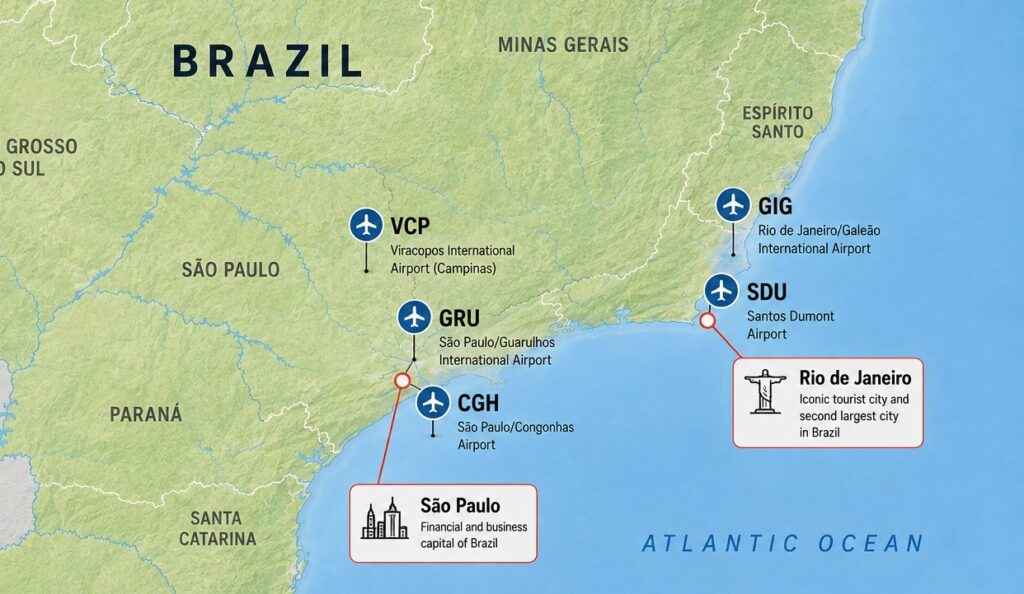
| Airport | Annual Passengers | Main Role |
|---|---|---|
| São Paulo–Guarulhos (GRU) | ≈44 million | Brazil’s largest international hub |
| São Paulo–Congonhas (CGH) | ≈23 million | Domestic business airport |
| Campinas–Viracopos (VCP) | ≈13 million | International passengers and cargo hub |
| Rio de Janeiro–Galeão (GIG) | ≈17 million | International tourism gateway |
| Rio de Janeiro–Santos Dumont (SDU) | ≈13 million | Domestic shuttle and business airport |
| TOTAL | ≈110 million passengers/year | Largest airport concentration in South America |
Together, these five airports handle approximately 110 million passengers every year, making this by far the largest concentration of commercial air traffic anywhere in South America.
Why International Travelers Are the Key to Brazil’s Private Transfer Market?
International travelers are among the most valuable customers for private transportation companies in Brazil.
Unlike domestic travelers, international visitors are significantly more likely to book private transfers in advance. Many prefer the convenience and peace of mind of a pre-arranged service rather than relying on local taxis or public transportation.
The main reasons include:
- Language barriers, as many taxi drivers and transport staff have limited English proficiency.
- Concerns about safety and unfamiliar surroundings, especially upon arrival.
- Limited understanding of the local transportation system and payment methods.
- Long-distance routes to popular beach destinations where public transportation is limited or inconvenient.
- The certainty of a professional driver waiting upon arrival, fixed pricing, and no need to negotiate fares.
The Rio–São Paulo corridor welcomes approximately 20 million international passengers every year, arriving mainly from:
- United States
- Canada
- United Kingdom
- Germany
- France
- Spain
- Portugal
- Argentina
- Chile
These travelers often require reliable transportation immediately after long-haul flights, creating consistent demand throughout the year.
South America’s Largest Cruise Market
Another major advantage of southeastern Brazil is its cruise industry.
The Ports of Santos and Rio de Janeiro are the two busiest cruise ports in South America.
| Cruise Port | Cruise Passengers / Season | Main Transportation Opportunities |
|---|---|---|
| Port of Santos | ≈800,000 | Airport transfers, São Paulo hotels, GRU, CGH and VCP |
| Port of Rio de Janeiro | ≈450,000 | Shore excursions, daily drivers, airport transfers |
Santos: Turnaround Cruises
Santos is Brazil’s largest cruise homeport, with most passengers beginning or ending their voyage here. This creates one of the country’s strongest markets for private transportation.
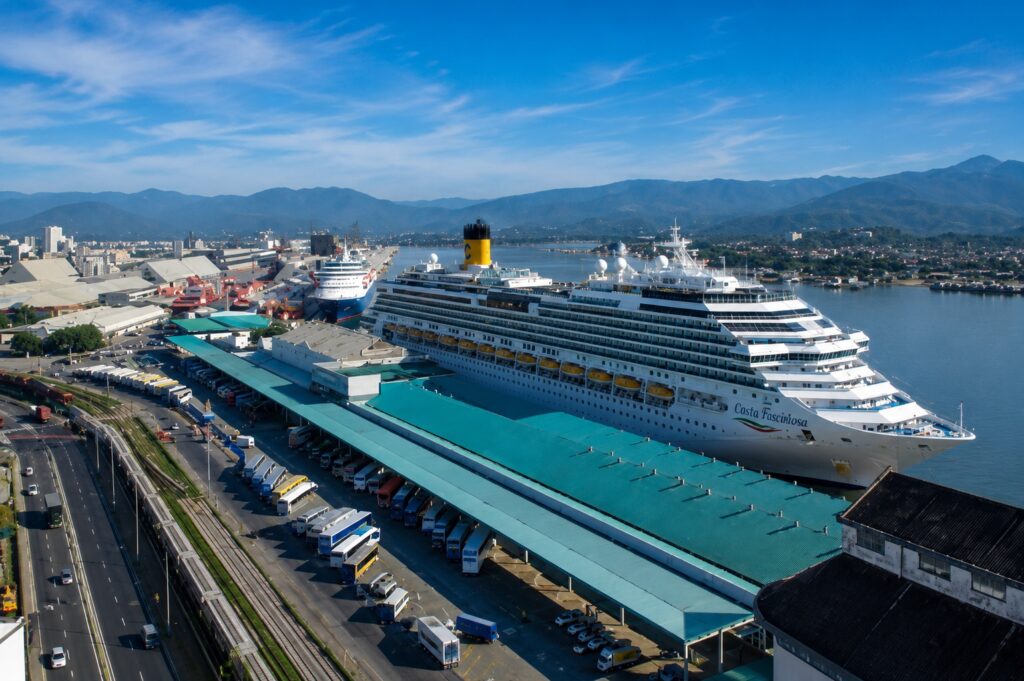
Unlike many cruise ports located close to major airports, Santos is approximately 75 km from São Paulo Congonhas Airport (CGH) and 130 km from São Paulo Guarulhos International Airport (GRU). Transfer times typically range from 1.5 to 3 hours, depending on traffic.
These long distances make private transportation the preferred option for international cruise passengers, particularly families and groups traveling with multiple pieces of luggage.
Key transportation services include:
- Airport → Santos Cruise Port Transfers (75-130 km)
- Santos Cruise Port → Airport Transfers (75-130 km)
- Sao paulo Hotel → Santos Cruise Port Transportation (75 km)
- Large Vans and Minibuses for Families and Cruise Groups
One of the busiest private transfer routes in Brazil is the Port of Santos to São Paulo, serving hotels, Guarulhos Airport (GRU), Congonhas Airport (CGH), and even Viracopos Airport (VCP).
Rio Shore Excursions (Daily driver)
Rio de Janeiro is one of South America’s premier cruise destinations and one of the most challenging cities for first-time international visitors to navigate on their own.
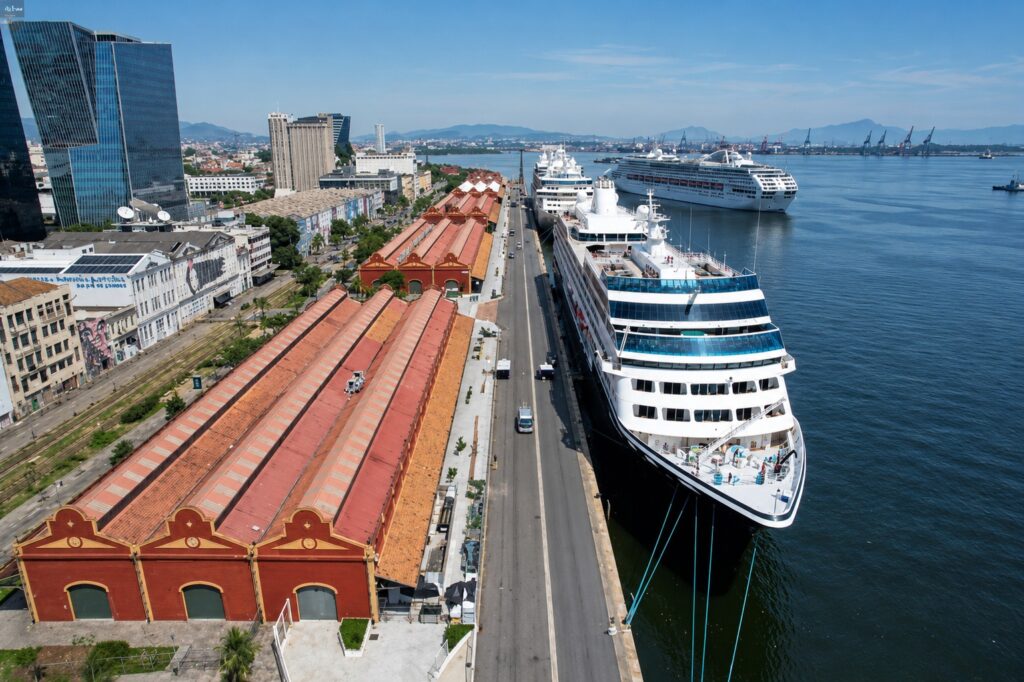
Language barriers, heavy traffic, safety concerns in unfamiliar areas, and the city’s dispersed attractions lead many visitors to choose a private English-speaking chauffeur for the day or a Private Rio Shore Excursion rather than relying on taxis or public transportation. These full-day services command significantly higher average booking values than standard airport transfers.
Cruise passengers stopping for the day frequently book dedicated driver services to visit:
- Christ the Redeemer
- Sugarloaf Mountain
- Santa Teresa
- Selarón Steps
- Copacabana
- Ipanema
- Botanical Garden
As a result, full-day private chauffeur services with English-speaking drivers represent one of the highest-value transportation products in Rio de Janeiro, especially for international cruise passengers seeking comfort, flexibility, and local expertise.
Long-Distance Beach Destinations Reachable Mainly by Road
One of southeastern Brazil’s greatest advantages is the extraordinary number of leisure destinations located just a few hours from Rio de Janeiro and São Paulo.
Unlike many destinations around the world, public transportation to these areas is often slow, indirect or inconvenient.
Popular Routes from Rio de Janeiro
- Búzios – 180 km (112 mi)
- Arraial do Cabo – 165 km (103 mi)
- Cabo Frio – 155 km (96 mi)
- Angra dos Reis – 160 km (99 mi)
- Conceição de Jacareí (Gateway to Ilha Grande) – 135 km (84 mi)
- Paraty – 250 km (155 mi)
- Petrópolis – 70 km (43 mi)
- Club Med Rio das Pedras
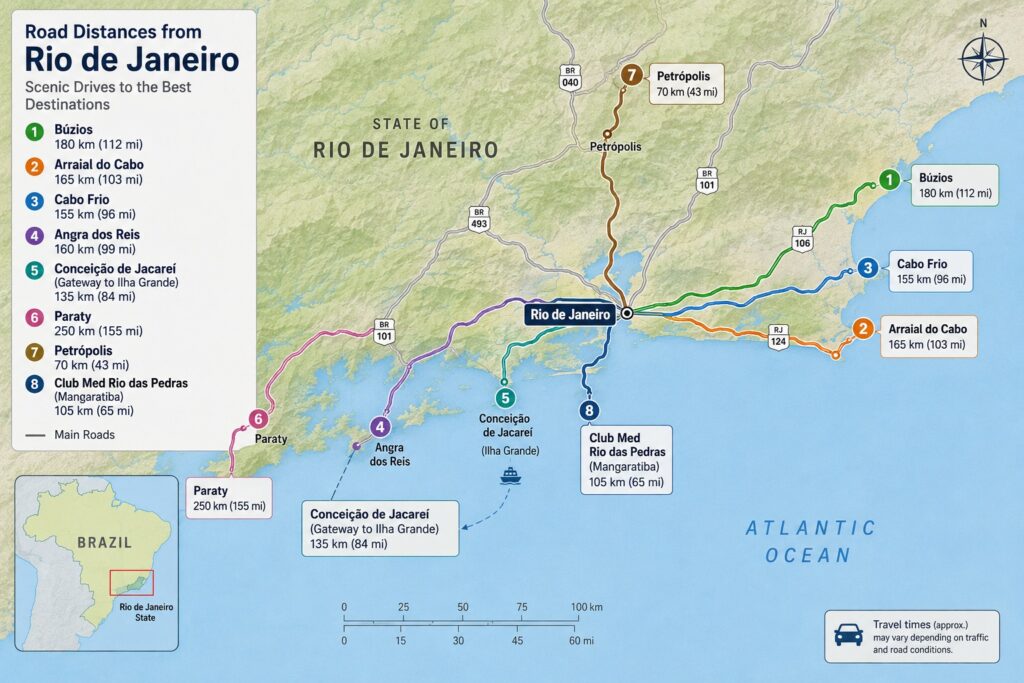
These routes represent a significant opportunity for private transfer companies, as most international travelers prefer to book private long-distance transfers due to the considerable travel distances, the limited availability of direct public transportation, and the convenience of a door-to-door service.
Popular Routes from São Paulo
- Guarujá – 95 km (59 mi)
- Riviera de São Lourenço – 120 km (75 mi)
- Maresias – 180 km (112 mi)
- São Sebastião – 200 km (124 mi)
- Ilhabela (via São Sebastião ferry) – 215 km (134 mi)
- Ubatuba – 225 km (140 mi)
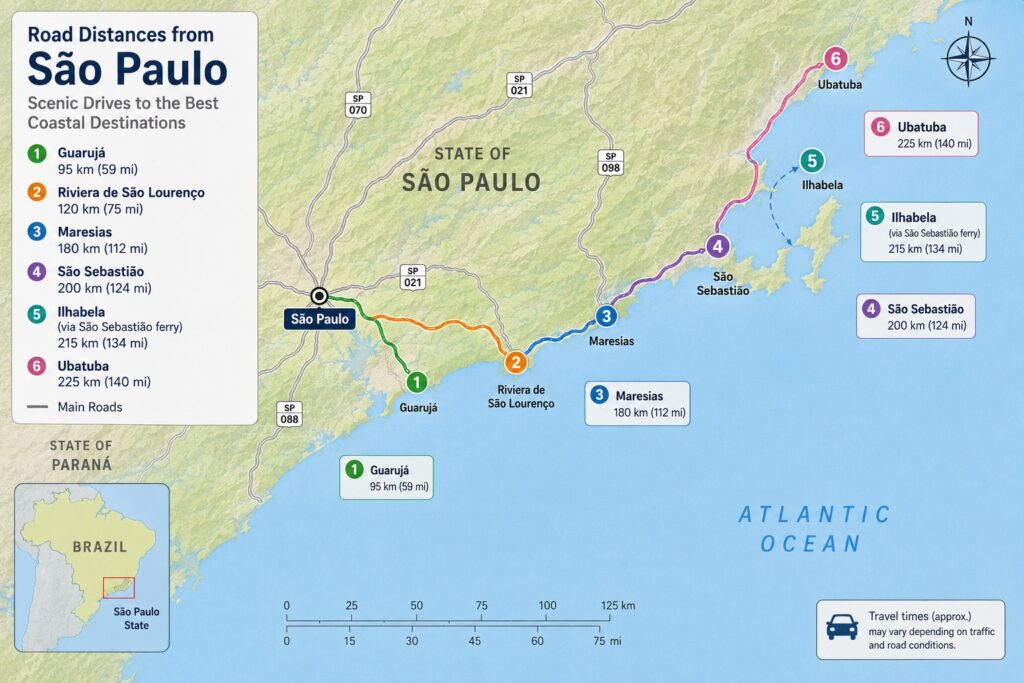
These destinations are among the most popular beach resorts for both domestic and international visitors. Due to the long travel distances, limited direct public transportation to many hotels and vacation homes, and the convenience of door-to-door service, private long-distance transfers are the preferred transportation option for families, groups, and international travelers.
Sao Paulo, unique Airport-to-Airport Transfer Demand
Very few regions in South America generate such high demand for airport-to-airport transportation.
The São Paulo metropolitan area alone regularly requires transfers between airports:
- GRU (Guarulhos) → CGH (Congonhas) – 35 km (22 mi)
- CGH (Congonhas) → GRU (Guarulhos) – 35 km (22 mi)
- GRU (Guarulhos) → VCP (Viracopos, Campinas) – 105 km (65 mi)
- VCP (Viracopos, Campinas) → GRU (Guarulhos) – 105 km (65 mi)
- CGH (Congonhas) → VCP (Viracopos, Campinas) – 95 km (59 mi)
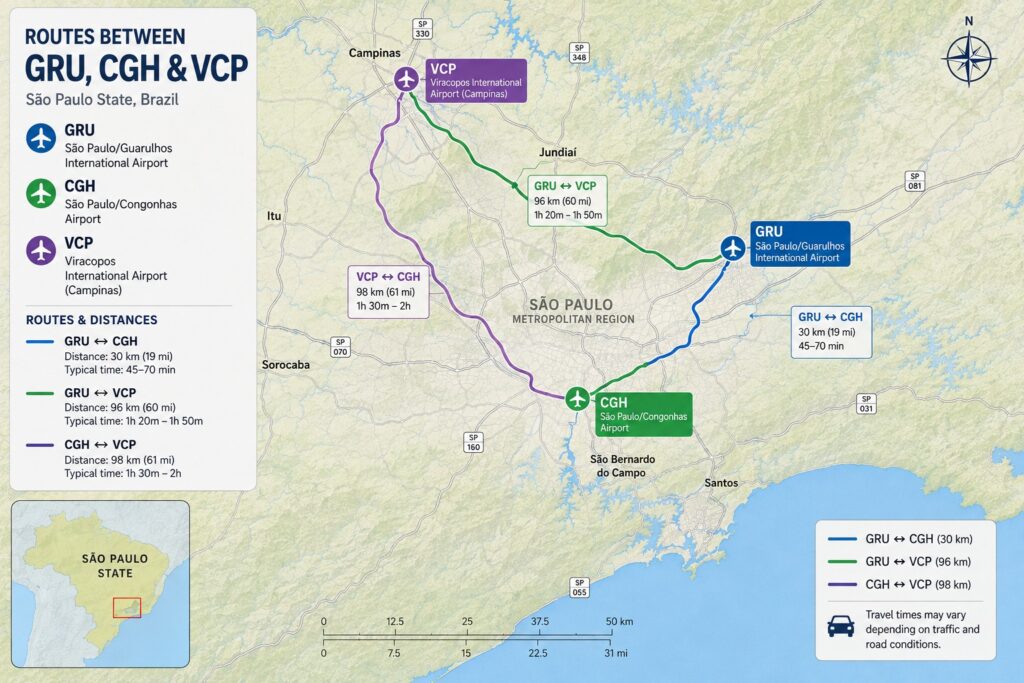
Viracopos Airport deserves special mention.
Located approximately 100 km (62 miles) from central São Paulo, VCP Airport serves both domestic and international flights but lacks convenient direct public transport connections to GRU and CGH.
Private transfers therefore become the fastest, safest and most practical option for passengers connecting between airports.
Sao Pualo, South America’s Largest Business Hub
São Paulo is South America’s largest business hub. Together with Campinas, São José dos Campos, and São Bernardo do Campo, it forms Brazil’s largest industrial and corporate region, generating strong year-round demand for executive transportation.
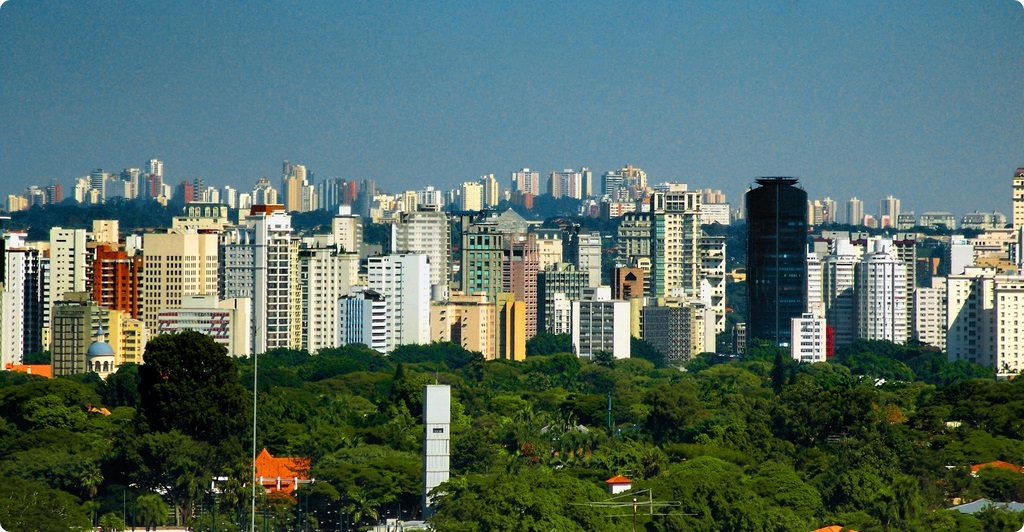
Long distances, heavy traffic, and business travel create consistent demand for executive sedans, premium vans, hourly chauffeur services, and English-speaking drivers.
Formula 1 São Paulo GP (High demand)
The São Paulo Grand Prix is one of the largest annual sporting events in South America, attracting tens of thousands of international visitors, corporate guests, sponsors, and VIPs. During race week, demand for private transportation increases significantly, particularly for airport transfers, executive chauffeur services, hotel transportation, and corporate events.
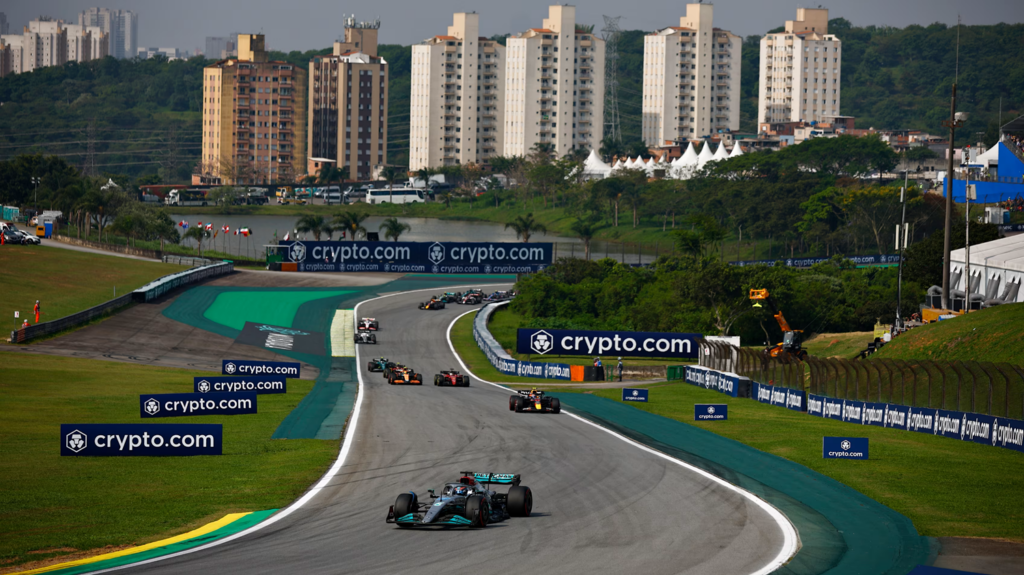
Many visitors choose private vehicles with English-speaking drivers to avoid heavy traffic, ensuring reliable transportation between airports, hotels, the Interlagos Circuit, business meetings, and exclusive hospitality events.
Rio-Macaé Transfer: Brazil’s Offshore Oil & Gas Capital
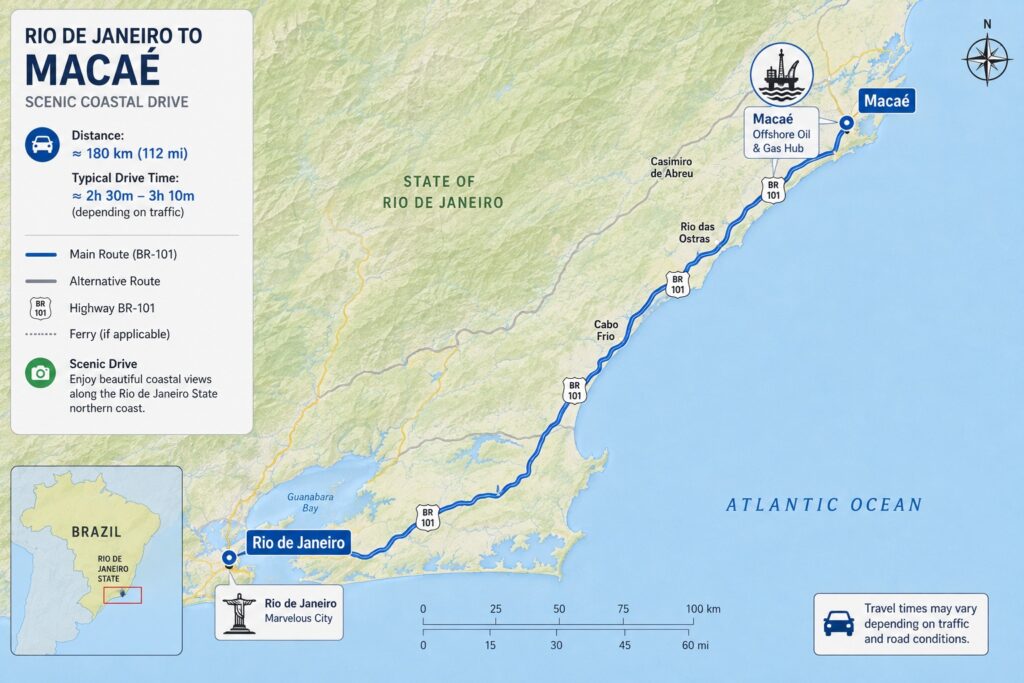
Macaé is Brazil’s main offshore oil and gas hub. The 190 km (118 mi) route from Rio de Janeiro to Macaé generates year-round demand for executive transfers, chauffeur services, and corporate transportation for energy companies, offshore crews, and business travelers.
A Significant Market for Armored Transportation
Brazil is also one of the few countries in South America where armored transportation represents an important premium market.
International executives, diplomats, government delegations and VIP travelers frequently request armored SUVs and executive sedans, particularly in São Paulo and Rio de Janeiro.

This specialized niche generates some of the highest-value airport transfer and chauffeur services available anywhere on the continent.
Intercity Transfers Between Rio de Janeiro and São Paulo
The Rio de Janeiro–São Paulo corridor connects Brazil’s two largest metropolitan areas—São Paulo, with over 22 million inhabitants in its metropolitan region, and Rio de Janeiro, with approximately 13 million. Together, they form the country’s busiest economic and travel corridor, generating constant demand for intercity transportation.
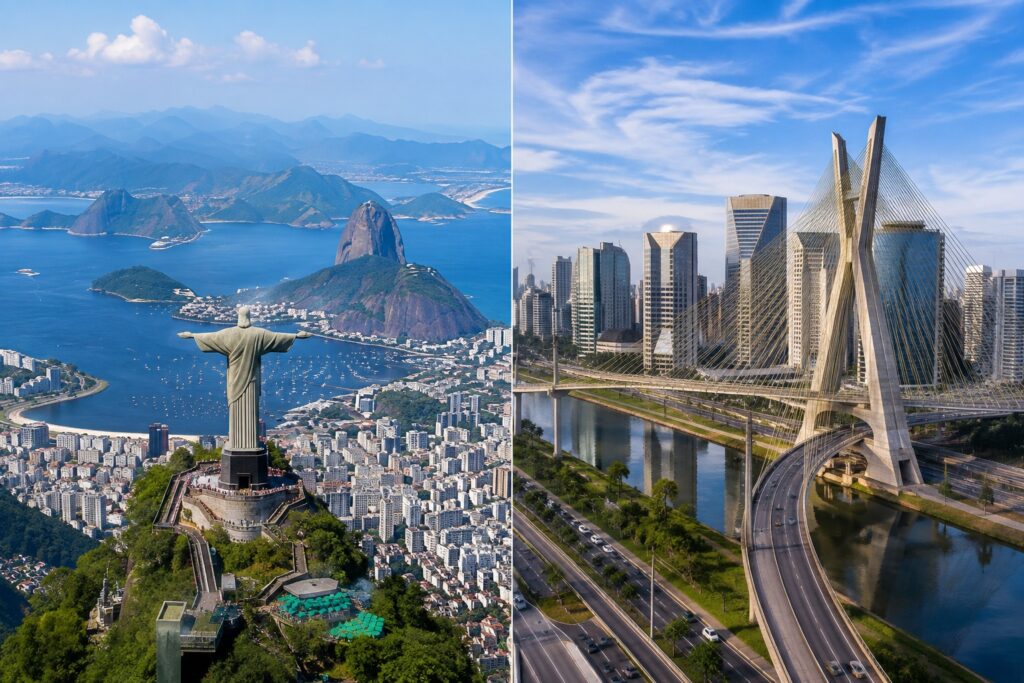
The road distance between the two cities is approximately 430 km (267 mi), with a typical travel time of 5.5 to 7 hours, depending on traffic.
While the air route is one of the busiest in the world, airfare can become very expensive during peak travel periods. When airport transfers, early arrival for check-in, security screening, boarding, baggage claim, and the final transfer to the destination are taken into account, the total time savings of flying are often much smaller than expected.
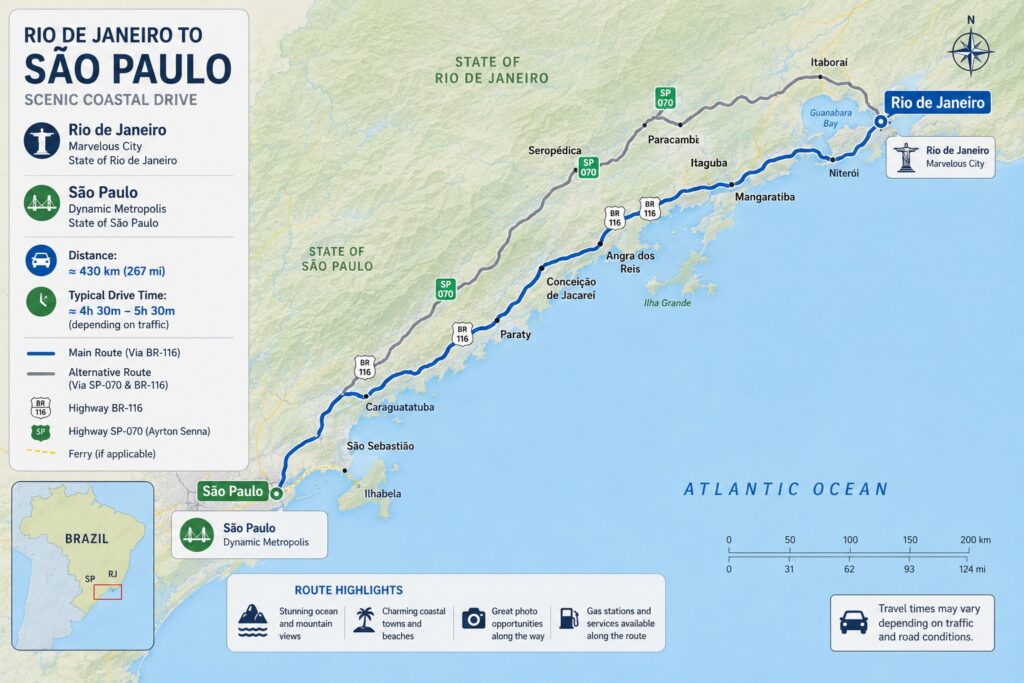
For families, corporate teams, cruise passengers, film crews, sports teams, and VIP delegations, private road transportation becomes an even more attractive option. The economics are particularly favorable for groups booking executive vans or minibuses, where the cost per passenger can be highly competitive while providing the convenience of direct, door-to-door service without airport formalities.
As a result, the Rio–São Paulo route represents one of Brazil’s strongest markets for long-distance private transfers, executive chauffeur services, and premium group transportation.
Why This Region Is So Profitable
Few places in the world combine so many transportation opportunities within a single region.
The Rio de Janeiro–São Paulo corridor offers:
- ✈️ 5 major commercial airports
- 👥 Approximately 110 million air passengers every year
- 🌍 Around 20 million international travelers annually
- 🚢 South America’s two busiest cruise ports
- 🛳️ More than 1.2 million cruise passengers each season
- 🏖️ Dozens of beach destinations accessible primarily by road
- 💼 The largest business travel market in South America
- 🛡️ A strong premium market for armored transportation
- 🚐 High demand for airport transfers, shore excursions, daily drivers and long-distance private transportation
Conclusion
When evaluating airport transfer opportunities across South America, no other region offers the same combination of scale, diversity and year-round demand as southeastern Brazil.
The Rio de Janeiro–São Paulo corridor brings together the continent’s busiest airport network, South America’s largest business center, the two busiest cruise ports, and an extensive network of coastal destinations that rely heavily on private road transportation.
Whether serving international tourists, cruise passengers, corporate executives or leisure travelers heading to Brazil’s famous beaches, transportation providers benefit from an exceptionally broad range of services that extends far beyond traditional airport transfers.
For airport transfer companies, travel agencies, destination management companies (DMCs), and mobility providers looking to understand South America’s strongest transportation market, the evidence is clear: the Rio de Janeiro–São Paulo corridor stands as the continent’s most profitable and diverse region for private ground transportation.
This article was created by the iSouthAmerica team based on more than 10 years of real operational experience providing private transfers, airport transportation, and travel services throughout Brazil and South America.